Water Damage Restoration in Moreno Valley, CA
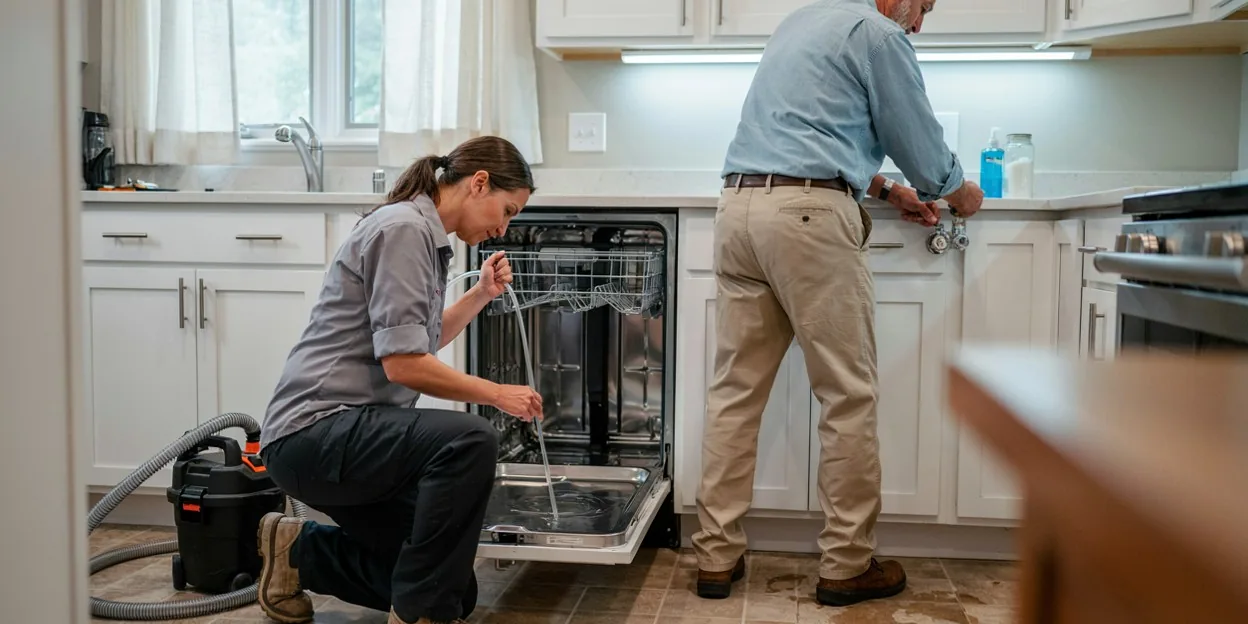
Moreno Valley did not exist as a city until 1984, when the communities of Sunnymead, Edgemont, and Moreno incorporated together. What followed was a tract build-out with few equals in California: the population went from about 49,000 at incorporation to more than 210,000 today, and nearly every house is a 1980s, 1990s, or 2000s two-story stucco home on a slab, with an attic air handler and a water heater in the garage. Those garages now hold thirty- and forty-year-old tanks.
The city sits in a bowl between Box Springs Mountain, the Badlands, and the hills around Lake Perris, and storm water drains west across the flats toward the Perris Valley. The February 2024 atmospheric river and Tropical Storm Hilary in August 2023 both put water in garages along the low streets, and the Box Springs slopes send mud onto the north-side tracts after a burn.
This site routes Moreno Valley homeowners to an independent local water damage provider by phone. The provider meters the house before anyone opens a wall.
Moreno Valley water damage in a forty-year-old tract
A tank that let go in a Sunnymead Ranch garage is water heater leak cleanup, and the shared wall into the house is metered from both sides. A ceiling stain under the attic air handler after a dusty summer is ceiling water damage repair. Mud and street water in the garage after a storm is storm flood cleanup.
The city desk and the county hospital in Moreno Valley
Rebuild permits for drywall, plumbing, and wiring go through the City of Moreno Valley, and the Riverside University Health System Medical Center on Cactus Avenue is the county's main hospital and one of the city's largest employers.
Call (951) 631-2989 and tell us what you found. We route the call to a local water damage provider serving Moreno Valley.
Services Available in Moreno Valley
Water Extraction
Standing water pulled off slab-floor tile, laminate, and carpet in a Riverside house, then the first meter readings to see how far it ran.
Structural Drying
Air movers and dehumidifiers run until slab-side drywall, cabinets, and flooring hit their dry target, even on a cool, damp January week.
Leak Detection
A warm tile, a spinning meter, or a soft wall traced to a pitted copper line under the slab or inside a wall before anyone cuts concrete.
Slab Leak Water Damage
Carpet, laminate, and the bottom of the walls soaked by a line that failed under the slab, dried out and documented once the plumber has it stopped.
Storm Flood Cleanup
Muddy street runoff and Santa Ana River bottom water pulled out of a garage or ground floor after an atmospheric river, with contaminated materials removed.
Water Heater Leak Cleanup
A tank that let go in a garage, side-yard closet, or hall cabinet and the drywall and flooring it soaked on the way across the slab.
Ceiling Water Damage Repair
A stained, sagging, or dripping ceiling under a second-floor bath, a roof-mounted swamp cooler, or an attic air handler, dried and opened only where wet.
Roof Leak Water Damage
Wet attic insulation, ceilings, and walls dried out after Santa Ana winds lifted tile or a winter storm found the valley flashing.