Water Extraction in Riverside, CA
The braided supply line under the hall bath sink split while you were at work in Ontario, and it ran for eight hours. The bathroom is under half an inch of water, the hallway carpet squishes all the way to the family room, and the laminate in the front bedroom has a ridge down the middle. This site puts you through to an independent local provider who extracts water from houses across Riverside and the western Inland Empire.
Getting the bulk water off the slab before it climbs the walls
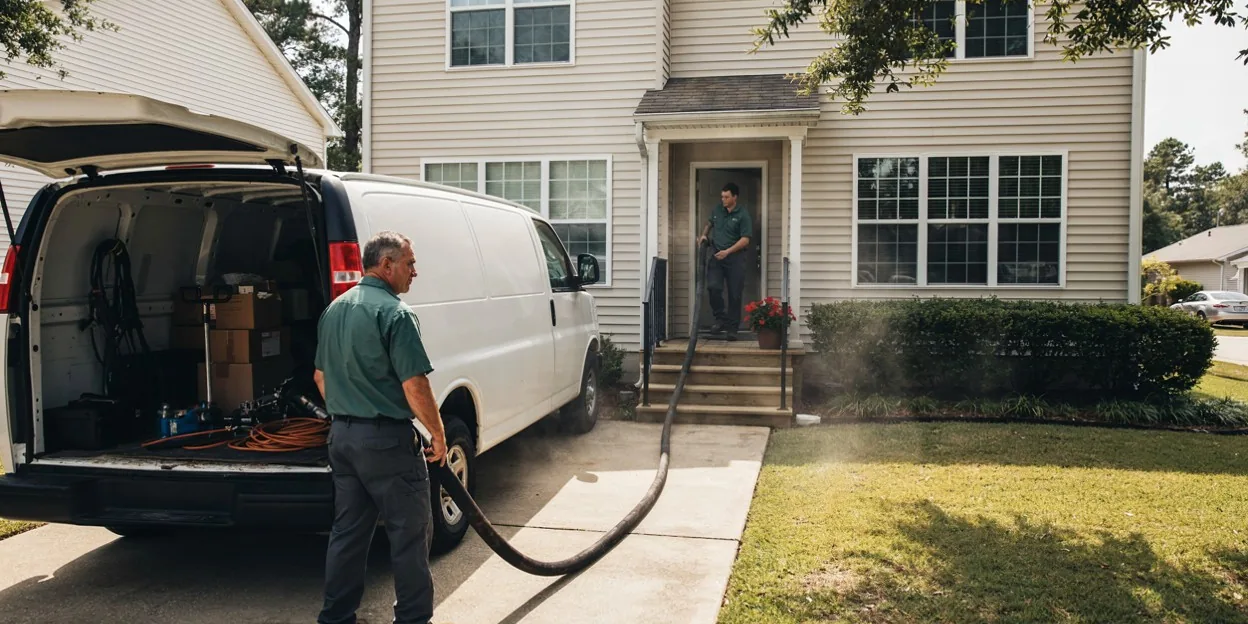
Extraction is the part of the job that cannot wait, because on a slab every hour the water sits it soaks deeper into carpet pad and higher into the bottom of the drywall. The crew brings a truck-mounted or portable extractor and pulls the standing water off tile, laminate, and carpet. On carpet they use a weighted wand that squeezes the pad through the fiber, which pulls out far more than a shop vacuum will.
Then the first meter readings go on every surface the water could have reached: the carpet pad at the far edge of each room, the drywall at the base of each wall, the toe kicks under the kitchen cabinets, and the garage side of any shared wall. That first set of readings becomes the drying plan.
What to handle before the extractor arrives
Close the house valve on the riser by the hose bib if the water came from a pipe, or the valve in the meter box at the sidewalk if the riser valve is stuck. Shut the breaker to any room where the water has reached an outlet. Pull up rugs, set furniture legs on foil or blocks, and move anything cardboard to a dry room. Open cabinet doors under sinks. Take photos of every room as you found it, and again once things are moved. Do not run the air handler to speed things up if water reached a floor register; say so when you call.
Carpet usually comes back, laminate usually does not
Clean supply water is the easiest case. Carpet often dries once the pad is pulled and the tack strip is checked. Tile over a slab usually stays, though the grout and any wood underlayment below it are metered. Drywall that reads wet at the base is cut a foot or two up and the insulation behind it removed, because it will not dry inside the wall. Laminate almost always comes out; the core swells and never flattens again. With the standing water out, structural drying takes over.
Water from a toilet overflow, a floor drain, or the street during a storm is a different category, and the crew treats it that way. Any carpet or pad that water reached is pulled, not dried. Tell us the source when you call so the crew shows up with the right gear.
Riverside slabs and the way water travels across them
Most houses here went up between the late 1950s and the early 2000s as single-story and two-story slab homes. A leak anywhere on the ground floor crosses the whole slab under the carpet, because the pad is a wick and the concrete does not absorb. A two-story tract house in Orangecrest or Mission Grove puts the laundry and a bathroom upstairs, so a failed washer hose lands on the family room ceiling fast.
The slab itself is the other source. Hard Inland Empire water pits copper from the inside, and a line under the hallway can run for weeks before the carpet feels damp. That is slab leak water damage with extraction as the first step. A storm that pushed street water under the garage door is storm flood cleanup, and the extraction there starts in the garage.
Many policies respond to a line that failed all at once and exclude one that dripped under a sink for months. We have not read your policy and will not predict what it does. Ask the crew to keep the first-visit readings and photos, since that file is what your adjuster will read.
Calling about water on the floor in Riverside
Say which rooms are wet, where the water came from, and whether it has stopped. Mention if it is dripping through a ceiling or has crossed into the garage. Keep the address and a number we can call back close by. Call (951) 631-2989.